


Chicago Synth Exchange | Synth 101
A Musician’s Guide to the Fundamentals of Sound Synthesis with Electronic Musical Instruments
When you walk down the stairs of Chicago Music Exchange, past our collection of low-end instruments in the BASSment you’ll find a room full of musical gadgets that have proven so worthy of their own wall space that we devoted a whole corner of our ground floor to synthesizers—which CME has affectionately dubbed Chicago Synth Exchange.*Most—though, not all—of these musical gadgets, have a keyboard attached, making them appear piano-like.
But, while some of them are engineered to create sounds akin to a piano, most—indeed, virtually all—are capable of making so many more sounds than a piano ever could that they’ve been classified within a musical instrument category all its own since long before CME became unofficially known as “The World’s Greatest Guitar Shop.”
*The Synth Exchange’s product category offering includes, but is not limited to, “electric pianos” and “keyboards,” alike, as well as all varieties of electronic synthesizers. It’s worth noting that some synthesizers in no way evoke, or even remotely resemble, a piano—neither in appearance nor sound nor functionality—e.g., Eurorack modules, MIDI controllers, and drum machines.


The Making of an Electronic “Sound Event”
Chicago Music Exchange may have started as a shop geared primarily towards a guitar-playing clientele, but we’ve also long been a destination for the whole band—first, with CME’s BASSment; then with Chicago Drum Exchange; and, now, also with the latest addition with Chicago Synth Exchange.
In addition to crossovers between different types of instruments individual artists employ, there’s also a lot of switching among electronic musical instruments—whether with an electric guitar, or using an analog synthesizer—not only in how definitive they’ve become in shaping the sounds of popular music over the decades; but, also, in how they electronically generate a “sound event”** to create the audio we hear, using oscillating electric currents.
**In the nomenclature used by legendary electronic music and pioneer of West Coast Synthesis, George Buchla.

Guitar vs. Synth Sound Events
With any instrument, the musician fundamentally must generate a series of “sound events” —whether melodic, harmonic, or ambient—in order to make what we (hopefully) call “music.
When it comes to the idea of creating a “sound event,” for many—if not most—guitarists, the tactile nature of fretting and picking strings intuitively makes sense: a guitar player must physically, simultaneously, fret a note and pluck a string, which vibrates over the pickups, oscillating the transducer’s magnetic field and thereby generating an electronic current.
The tone of that frequency can then be shaped even further, based on sonic characteristics imparted from the guitar’s physical attributes and electronic components, as well as the guitarist’s own stylistic dynamics—not to mention any other modulation or effects within the guitar signal chain—or, just as importantly, the amp from which the sound eventually emanates!
That said, even guitar players who aren’t at all shy around a black-and-white keyboard may not understand the first thing about how analog components generate an electronic “sound event” in a synthesizer beyond pressing down on a key—a “sound event generator”—let alone, how to shape the volume, tone, and modulation parameters of that “electronic sound event,” which shape it into it an audible set of sounds, further inspiring their musical creativity.


Synth 101: Class in Session
Let’s get down to the basics of sound creation: How do you create a “sound event” with an analog electronic music synthesizer? The obvious answer is of course to power it up, plug it into an amp, and press down a key. But, without any mechanism that causes a hammer to strike a set of strings and resound throughout the body of the instrument—including the wood it’s constructed out of***—how does the physical application of a synth player’s touch electronically generate a sound? Well, we, at Chicago Synth Exchange, are here to help!
In our ongoing series of in-store “Synth 101” seminars, resident Synth expert Roland Chira covers everything from the basics of sound synthesis to the virtually endless variety of sounds and functionalities available from all synth products in the store—along with an audio demonstration, so you can hear each of the sounds you can create, yourself—we’re devoting a section of CME’s Soundboard Blog to provide an additional online resource and reference for all musicians, on the fundamentals of sound synthesis!


Lesson 2: Synth Filter Types According To Roland Chira
Imparting Personality to a Synthesis Circuit
Whether you’re just getting into electronic music or you’re a seasoned synthesist, you wouldn’t be alone if you are confused about what differentiates brands during different eras—considering everything from components used to design philosophies. In this article, we’ll cover the defining factor of any synth's characteristic “personality”—the filter.
Filters are often described as the main component that gives a synth its character because of the way it processes sound. The role of a filter is to remove or introduce certain frequencies to the patch. Usually, the third module in a synth's signal flow, the filter processes the sound generated by the oscillators and follows the mixer.
In this post, we’ll showcase some of the most well-known filter designs that many people desire, and discuss some reasons why some musicians gravitate towards one over the other.
Filter categories found on synths:
- Low-Pass Filters: Rolls off the high frequencies, allowing ony the lower frequencies to pass through.
- High-pass filters: Rolls off the low frequencies, allowing only the higher frequencies to pass through.
- Bandpass filters: Cuts the lows, and the highs, but allow the low mids and the high mids to pass through (this is achieved when you combine a low pass and high pass filter together)
- Notch filters: Allow most frequencies to pass through, but only cut out a very specific range of frequencies
FILTER TYPES
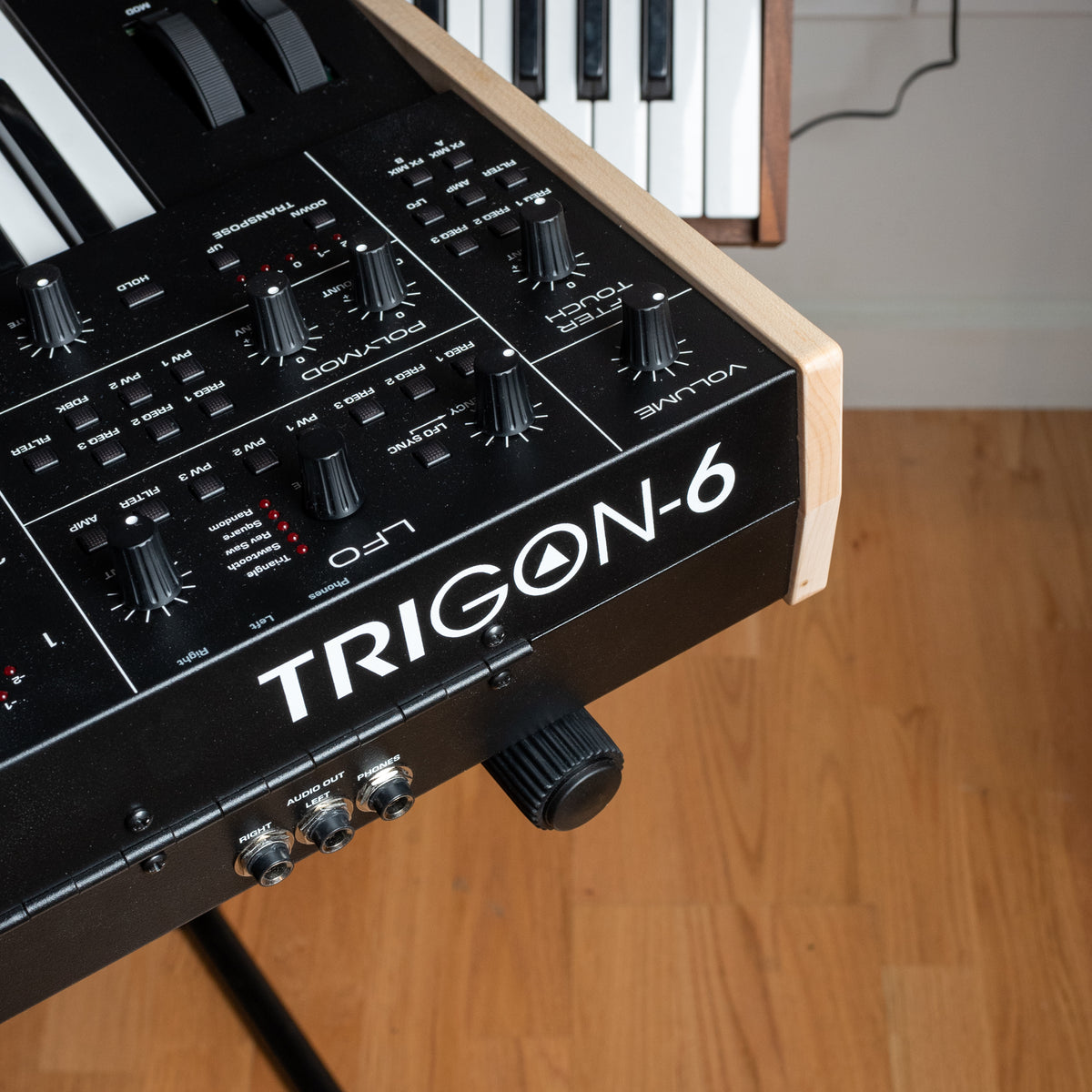
Moog Ladder Filter
You’ve heard this filter in countless psychedelic rock and early electronica records—and on the records of pretty much anyone looking for the insane bass synth and lead synth sound that Moog is known for.
The development of Moog ladder filter traces all the way back to the late ‘60s when it debuted as part of Dr. Robert Moog's modular systems, made in collaboration with Herb Deutsch, but it was made accessible to the masses when Dr. Moog created the Minimoog Model D.
The Model D was innovative in the sense that it was portable and way more affordable than the larger modular cabinets that were used in larger studios and universities. Often described as characteristically rich and dark, the Moog ladder filter is a four-pole low-pass design, which cuts out 24 dB of the sound, while saturating anything by 10 dB. This, in turn, thickens anything going through it, so many use this design for basses and lead sounds.
One downside of the Moog Ladder Filter is that, when you increase the resonance, it tends to eat up a lot of the bass frequencies. As a result, most modern iterations of this filter include an extra distortion or “drive” setting on the filter to compensate for the low-end loss, and it has since made its way onto countless products besides synths, such as Eurorack modules, effects pedals, and an endless number of plugins.

Vintage Synths that use Ladder Filters:
- All Vintage Moog Designs
- Some '70s Roland Designs, such as the SH-3
Modern Synths that use Ladder Filters:
- All of Moog's Catalogue
- Sequential Pro-3
- Sequential Trigon-6
Artists who are Moog Enthusiasts -
- Wendy Carlos
- Kraftwerk
- Parliament
- Tangerine Dream
- Keith Emerson
- Trent Reznor
- Stefan Bodzin
- Mike Dean
- Sequential Pro 3 Video
- Sequential Trigon-6 Video
- Moog Subsequent 37 Video
Hear this Filter In Action -
Oberheim SEM Filter
The SEM (Synth Expander Module) was designed by Tom Oberheim in 1974 as a small monosynth that can be used to expand the capabilities of larger modular designs of Moog and ARP.
On paper, the SEM is nothing special, since it’s just a monosynth with two oscillators, a filter, and two envelopes. Despite its simplicity, the SEM filter has really separated itself from its counterparts, because it is a two-pole design that cuts out 12 dB of a sound, so the slope isn't as drastic as the Ladder filter, but it includes other filter modes, besides lowpass, such as bandpass, highpass, and notch.
The Oberheim sound is described by its users as being sharp, bright, and fizzy, which makes it very popular among the synth-wave crowd. Another plus of the SEM filter is that the resonance does not scoop the low-end out, which makes this filter excellent for bass sounds.
Eventually in the mid to late ’70s, during the great polyphony wars, Oberheim introduced the beloved two-, four-, and eight-voice synths to the market and dominated the scene until Dave Smith introduced the Prophet-5.
The architecture of a polyphonic, SEM-equipped instrument is very simple, in that it is just multiple SEMs poly-chained together in a case, with one keyboard controlling the modules at once. Just imagine the sonic possibilities of eight of these modules with multimode filters, providing the option for different filter settings on each and every note, and letting users make the most massive pad sounds on earth!
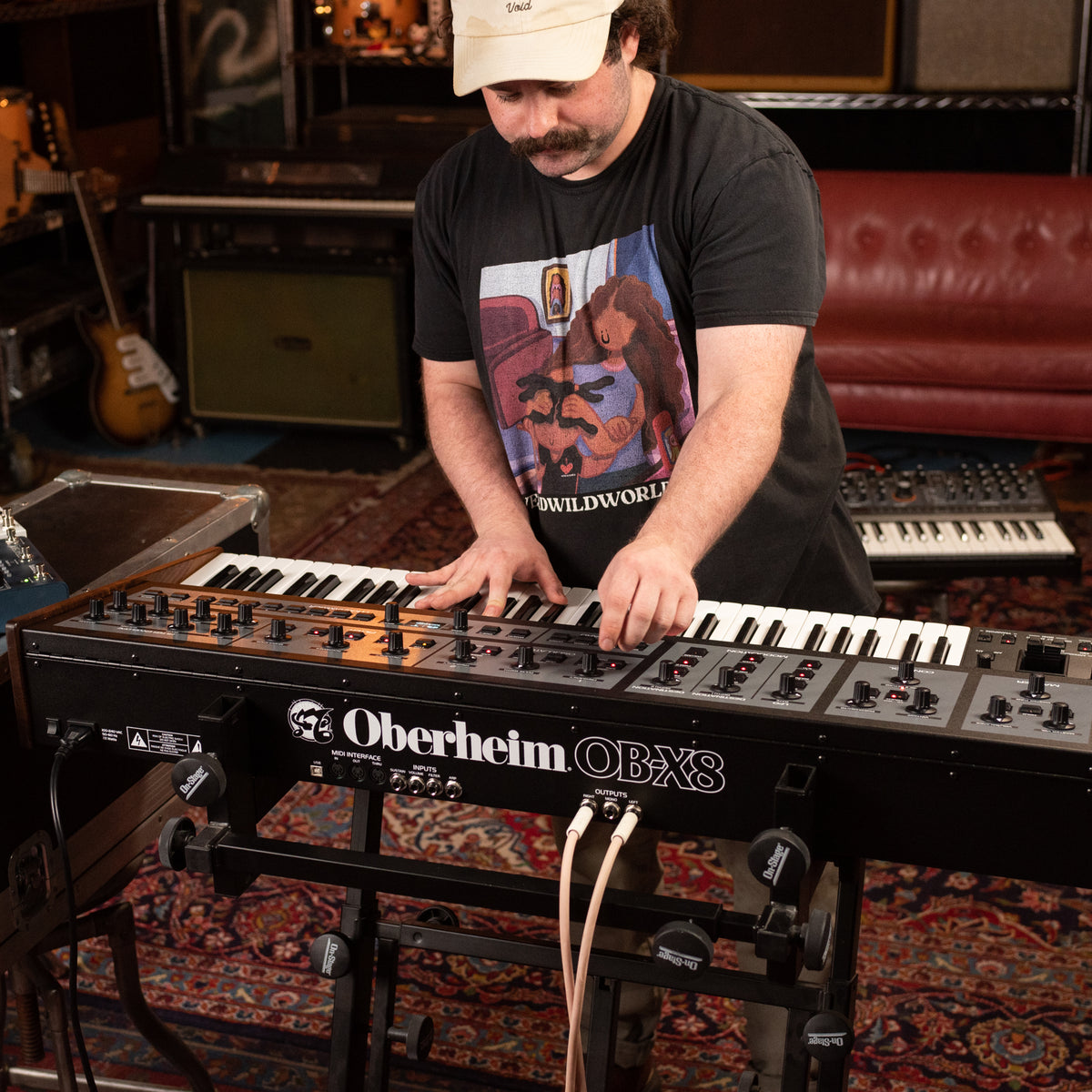
As more constricted interfaces became popular with patch storage, Tom Oberheim had to come up with something quick—and, in 1979 he came up with the OB-X. The simplest way to describe the OB-X is basically as polyphonic SEMs with the same filter, but in one box that controls all of the parameters of the synth voices simultaneously. The OB-X has the same filter design that Tom designed for the SEM modules, but lacks the extra modes besides lowpass, and it was the last out of the vintage Oberheim synths to have the SEM filter because they needed to have a more reliable design overall.
Oberheim later transitioned to Curtis chips (CEM 3320) as introduced on the OB-XA and OB-8. Even though they replaced the classic SEM design, the Curtis chips still retained the 2-pole characteristic of the filter, so the sound wasn't wildly different from the first design.
The legacy of this filter still lives on in Tom Oberheims newer designs (SEM reintroductions, OB-6 in collaboration with Dave Smith, and the new OB-X8.), software, and Eurorack modules. Some other synth companies have also incorporated a similar multimode two-pole filter design—for example, Arturia, with the Freak series of synths.
This filter has a very bright future for it, because Tom Oberheim got his rights back for the Oberheim name and Oberheim is now allied with Sequential to bring back that two-pole goodness!
Vintage Synths that use the SEM Filter:
- Oberheim SEM (and its polyphonic variants)
- Oberheim OB-X
Modern Synths that use the SEM Filter:
- Oberheim OB-6
- Oberheim OB-X8
- Arturia Microfreak & Minifreak (similar filter design)
Artists who are Oberheim Obsessives -
- Rush
- Van Halen
- Prince
- Steve Porcaro
- Com Truise
- Kyle Dixon
- Michael Stein
Hear this Filter In Action -
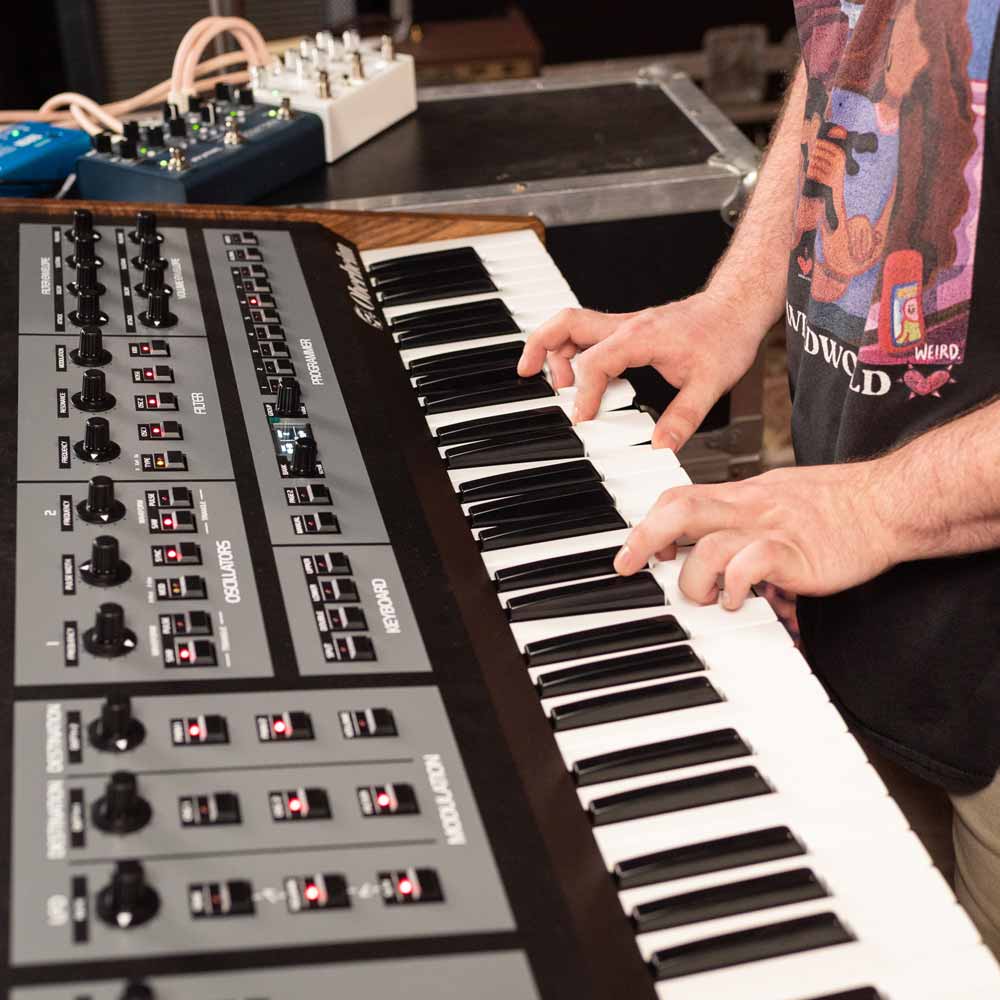
Watch Roland In-Action with Oberheim OB-X8:
CEM 3320 Filter IC
Curtis Electro Music (CEM) was founded by Doug Curtis in 1971, with a mission of making integrated circuits (IC) for synth designs, with his business partner Dave Rossum's, whose most notable design was by far the CEM 3320 Filter IC.
The 3320 was introduced in the third revision of the Prophet-5, and the whole chipset proved to be more reliable than the previous SSM set (although many musicians claim that the SSM chips have a better sound).
The CEM 3320 was adopted into many synth designs after the Prophet-5 rev 3, such as the OB-XA, OB-8, and the ELKA Synthex. Despite being the same IC on all of the synths, the filter sounds wildly different on each. This difference is due to each synth designer using different transistors, values, and different design philosophies, overall.
The CEM 3320 was—and still is—monumental in the industry, as many of the synths that previously employed it were re-introduced. Plus it has been emulated in both Eurorack and software—although Doug Curtis’s company still exists, and is being managed by his wife after his untimely passing in 2007.
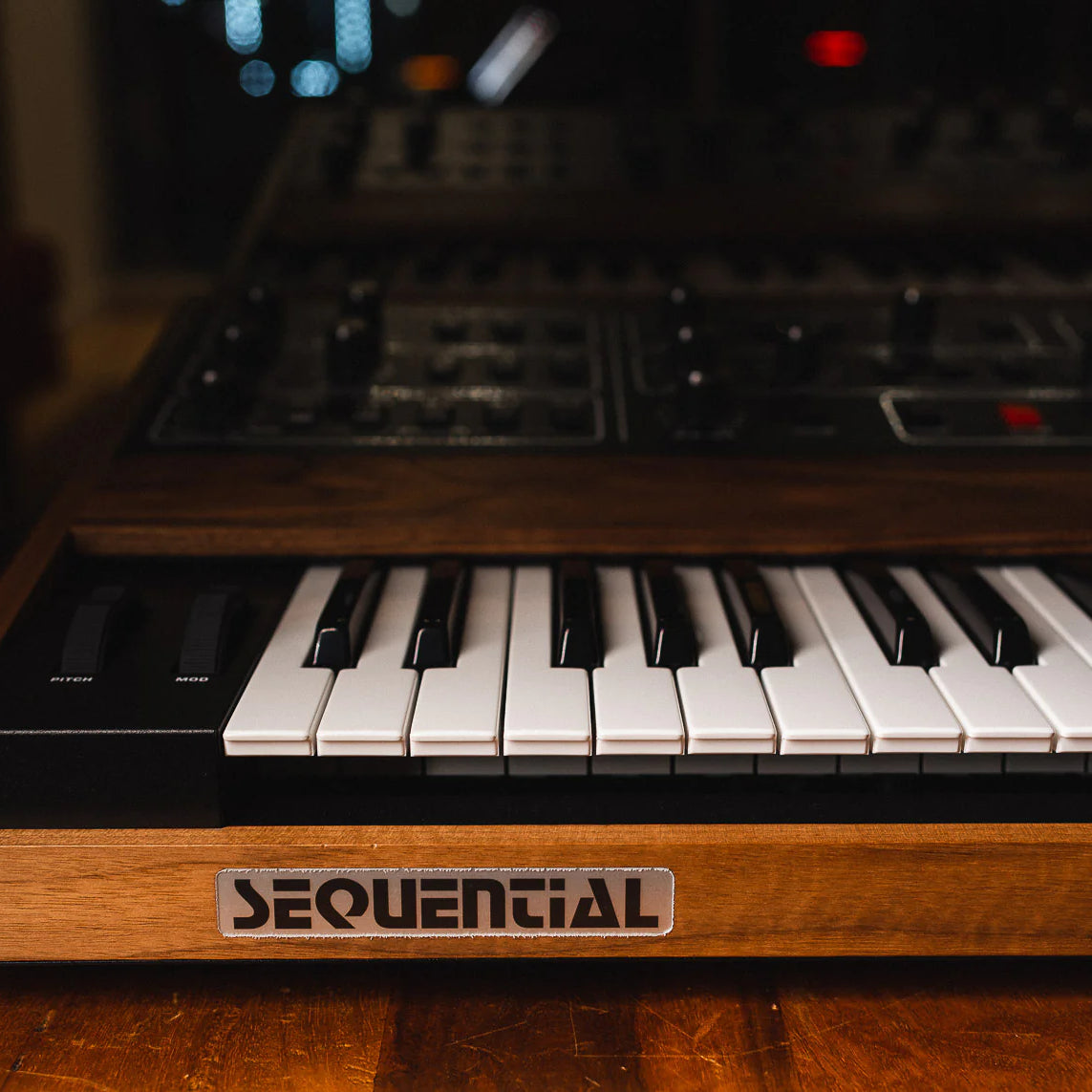
Vintage Synths with the CEM 3320 Filter:
- Sequential Prophet-5 rev 3
- Elka Synthex
- Oberheim OB-XA & OB-8
Modern Synths that use the CEM 3320 filter:
- Sequential Prophet-5 rev 4
- Oberheim OB-X8
Artists who use the CEM 3320 Filter:
- Thom Yorke
- Vince Clarke
- Phil Collins
- Vangelis
- Jean Michelle Jarre
- Tycho
- Bonobo
- Van Halen
- Japan
Hear this Filter In Action -
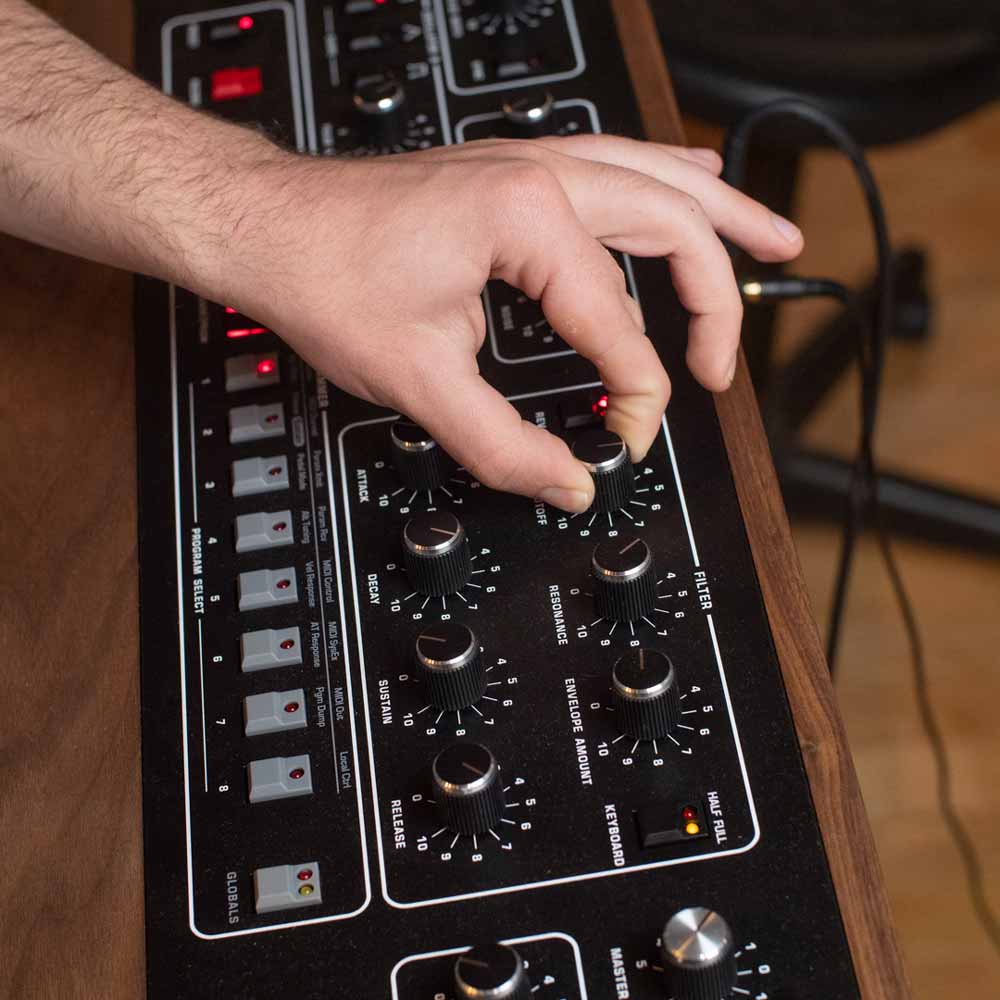
Sequential Prophet Comparison: New Vs. Vintage
SSM 2040
In 1978, when the polyphony battle was getting started, there was a synth that set the standard on how this would be achieved—and, as many synth enthusiasts already know, this was the Sequential Prophet-5, designed by the synth icon Dave Smith and John Bowen.
The Prophet-5 checked all of the boxes in terms of sound, portability (for the time), looks, and it was the first to use microprocessors to store sounds, making patch recall possible with ease, using the esteemed 2040 chipsets created by Dave Rossum of SSM (Solid State Music) and E-mu.
Rossum’s chipsets made it possible to make a microprocessor-controlled polyphonic synth, giving users a single control surface for all five voices—unlike the monstrous Oberheim SEM-based polysynths, and the sound of the components that Dave Rossum designed became beloved by sound designers and keyboardists, especially the filter IC (SSM 2040).
The SSM 2040 was used on the first two Prophet-5 revisions, and the sonic quality has been described as very mid-rangey and very resonant. (I would go as far as to say that this filter might have one of the best resonances I have ever heard, since it can be aggressive and tame at the same time, which is a testament to its versatility).
The SSM 2040 filter has been recreated as the SSI 2140 by Dave Rossum and has been featured in the newest Prophet-5/10 rev 4, as well as the Take-5 by Sequential, which might be the best introductory synth of modern times. Come in and experience this beauty yourself!
Vintage Synths using the SSM 2040 Filter:
- Prophet-5 rev 1
- Prophet-5 rev 2
Modern Synths that use the SSM 2040 Filter:
- Multitudes of Eurorack Modules
- Sequential Take-5
Artists who use the SSM 2040 Filter -
- The Cars
- Vangelis
- Tangerine Dream
- Rick Wakeman
- Weather Report
- Yellow Magic Orchestra
Hear this Filter In Action -
Sequential Take 5 | Chicago Synth Exchange Demo
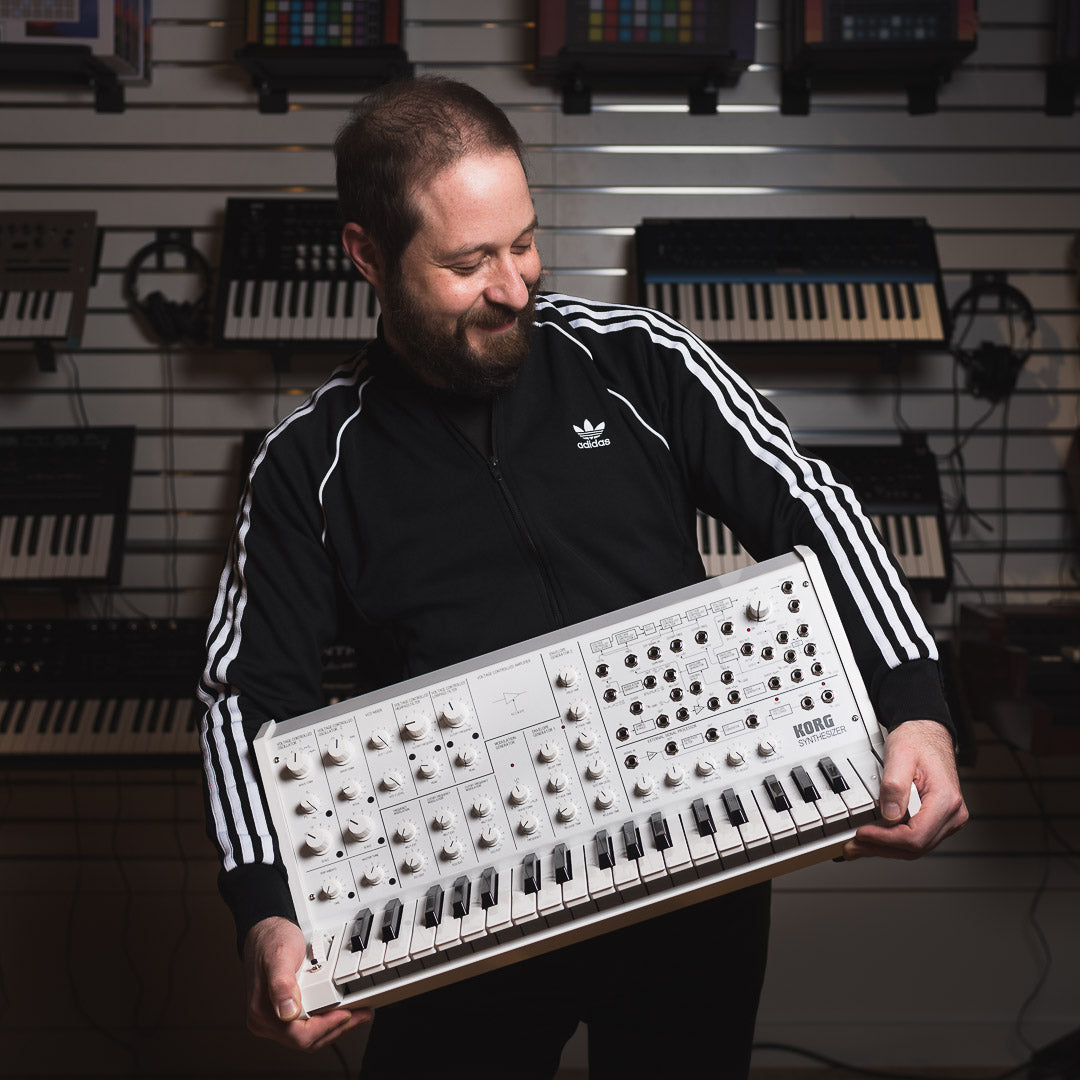
Korg MS-20 Filter
If you love the harsh, industrial, squelchy sound of the ‘90s electro scene, you have definitely heard this filter design on countless records!
The Korg 35 filter debuted on the MS-20 design back in 1978, but the development of the filter started when Korg entered the synth world. Inspired by the design that head engineer Fumio Mieda incorporated into the MiniKorg—a hybrid of a 6 dB one-pole high-pass filter, with a 12 dB two-pole lowpass filter—it’s the combination these filters that creates that Korg sound we all know and love!
When Hiroaki Nishijima of Korg designed the MS-20, he collaborated with Mieda to incorporate the MiniKorg filter to the MS-20. The MS synths added more controls to the filter, including resonance knobs dedicated to both the high- and low-pass—and in the case of Korg, “resonance” is just called “Q.” The Korg 35 filter's sound is most often described as “squelchy,” “aggressive,” and “sharp,” and although the MS series of synths did not sell as well in the late ‘70s, due to the polyphonic uprising, fast forward to the ‘90s a lot of young electronic musicians—like Daft Punk and Aphex Twin—started to rediscover these beasts, pushing the envelope in how they incorporated the filter musically. A popular method at the time was to run a guitar, vocals, drums, and anything that can be used as a sound source through this filter to add the right amount of grit and unease.
Today the Korg 35 filter and its predecessor are widely available through the reintroductions Korg has made (like the MiniKorg FS, MS-20 Mini and Wavestate, through digital recreation).
Plus, Korg and Arturia have made plugins of the Korg 35 filter, and there are a lot of different Eurorack manufacturers that have made their own homage to this staple. So, it’s safe to say, this design is here to stay—since it’s the only one that really gives you this amount of bite!
Vintage Synths that use the Korg MS-20 Filter:
- Korg MS-20
Modern Synths that use the Korg MS-20 Filter:
- Korg MS-20 Mini
- Korg MS-20 FS
Artists who use the SSM 2040 Filter -
- Daft Punk
- Mr. Oizo
- Prodigy
- Chemical Brothers
- George Fitzgerald
- Autechre
- Aphex Twin
Hear this Filter In Action -
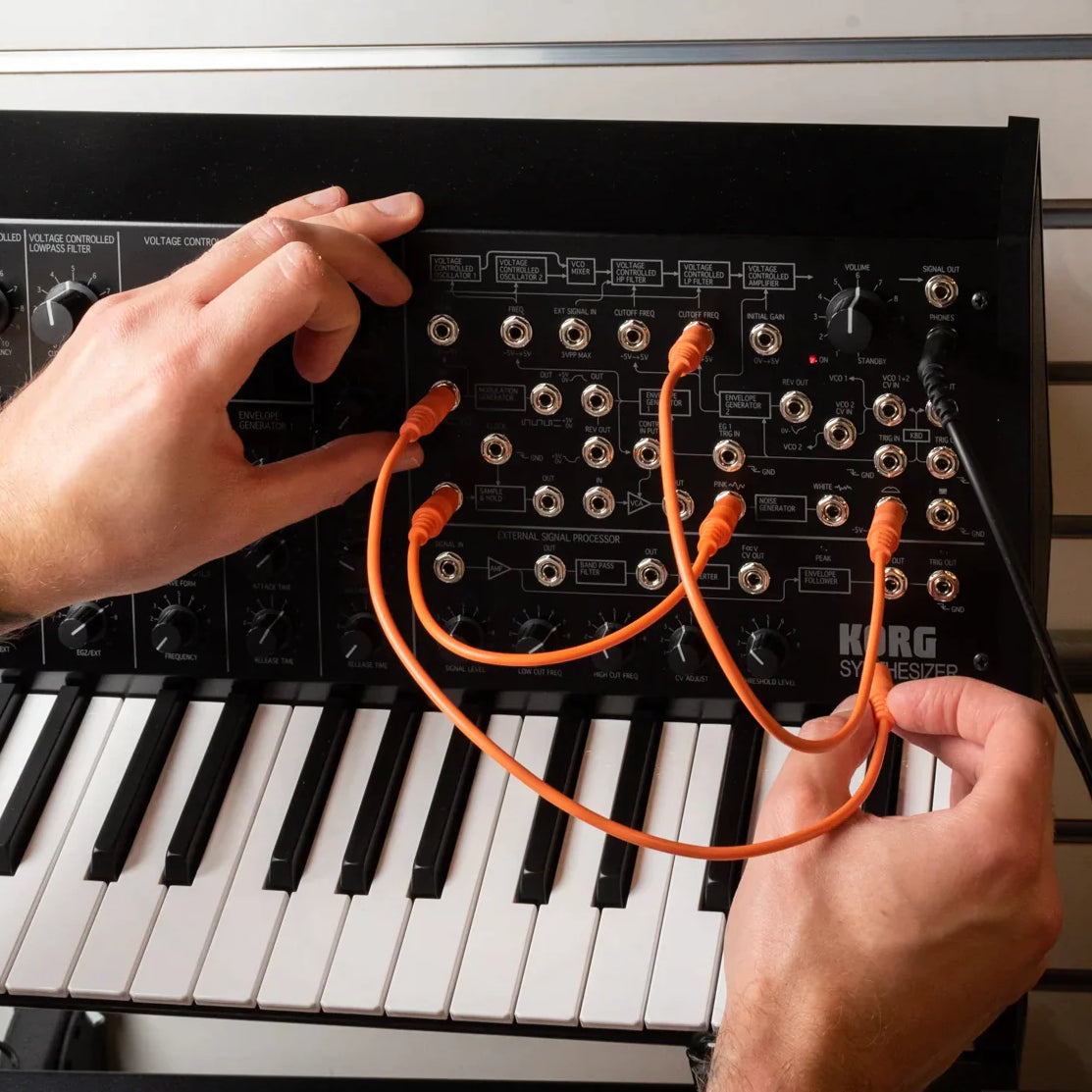
Korg MS-20 FS | Chicago Synth Exchange Demo
Roland IR3109 (AKA the Roland “Everything Filter”)
Possibly my favorite filter, the famed Roland IR3109 has an incredibly diverse range of sounds!
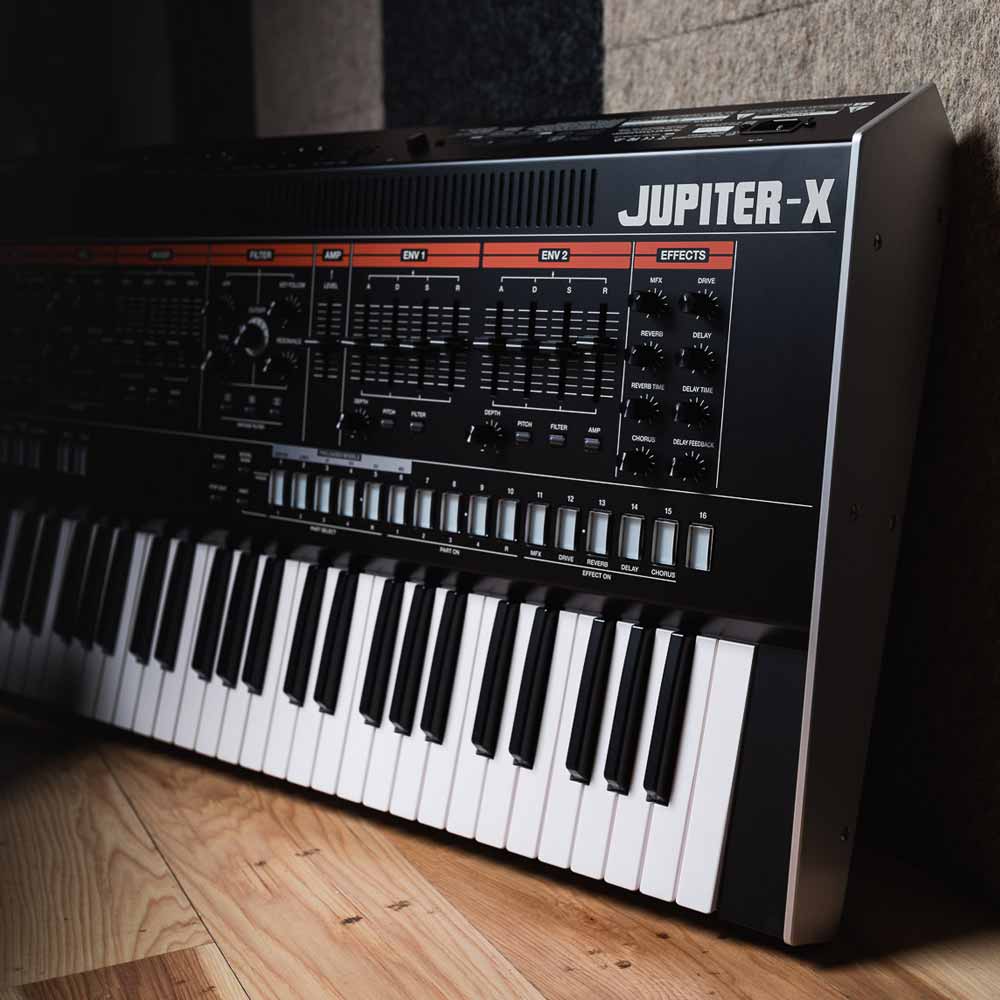
If you’ve heard the squelch of acid from the Roland 303, the pasty lush pads of the Juno-106, the snappy, bubbly arpeggios of the Juno-6/60, the liquidy leads of the SH-101, and the powerful chord stabs of the Jupiter 8, then you have definitely heard this filter—because all of these synths utilize the IR3109 filter.
The history of the IR3109 traces back to 1979, when it was introduced for the latter half of the Jupiter 4 (Rolands first polyphonic synth w/ four voices). The first half of Jupiter 4 used Rolands BA662 design, which is described as the “1970s Roland sound”—since it was utilized in the SH-2, SH-9, and Pro-Mars, all of which were considered semi-affordable monosynths—but, when they included these filters in the Jupiter 4, it was the first time Roland applied the filter in a polyphonic synth. Although the filter had pleasing characteristics often described as being sonically “silky,” “liquidy,” and “smooth,” it caused issues in the Jupiter 4, due to its large size.
Later on in the manufacturing of the Jupiter 4, Roland engineers developed the IR3109. The 3109 was smaller in size which was perhaps the most important factor since Roland was entering the polysynth market, and they needed to replicate multiple synth voices to achieve polyphony—some more real estate was needed.
The 3109 has been described as similar to other filter designs, like the SSM 2040 (Prophet 5 Rev 1 and 2) and CEM 3320 (Prophet 5 Rev 3, Pro 1, OBXA/8, and ELKA Synthex), technically—but, it has a sound all its own.
In my opinion, the IR 3109 sound is the most versatile filter circuit ever made. It has a sharp resonance that self-oscillates in the Junos and SH-101, while it doesn't self-oscillate on the Jupiters; but, it has that powerful drive that the synths are known for. In the case of the Jupiter 8, it has a 2- and 4-pole mode, and the Jupiter 6 added more filter types with the 3109, such as bandpass, highpass, and lowpass. As you can see from all the synths listed so far, this filter became the primary sound of Roland synths from 1979 to 1984 with the Juno-106, before a few MKS-80s being the last of the great synths to have used this filter.
I want to make a point of the fact that the 3109 does sound different on each synth model and that is due to the topologies (i.e., the way the circuits are applied). The best way to hear these differences is to play any two Roland synths from the era —like the Juno-6/60 and the Juno-106, both of which use the same filter, but different topologies—then, try to hear the difference. What you might hear is the way the 3109 sounds in the 6/60 are a little sharper, especially when resonance is applied; while on the 106, you can hear the stepping due to the digital control.
Due to the number of synths that this filter was employed in, you can expect tons of modern recreations of the chip in Eurorack form, software, and digital hardware. I recommend any of the synths with this filter, which lets users both recreate the sounds of the past and take them to the future—which can easily be achieved with some of Roland’s boutique models and the Jupiter and Juno x models!
Vintage Synths that use the Roland IR3109 Filter:
- Later Roland Jupiter 4 Models, Jupiter 8, Jupiter 6
- Roland SH-101
- Roland MC-202
- Roland TB-303
- Roland Juno-6,-60,-106
- Roland JX-3P
- Roland MKS-80 (Early Models)
- Roland Juno-X
- Roland Jupiter-X
Modern Synths that use the Roland IR3109 Filter -
- Modern Roland Jupiter-X
- Modern Roland Juno-X
- Roland Boutique models, such as the SH-01a, Ju-06a-JX-03, JP-08, and TB-03
Artists who use the Roland IR3109 Filter -
- George Fitzgerald
- Com Truise
- Tears for Fears
- Michael Jackson
- Olafur Arnalds
- Nils Frahm
- Tame Impala
- Mac DeMarco
- The Belleville Three
Hear this Filter In Action -
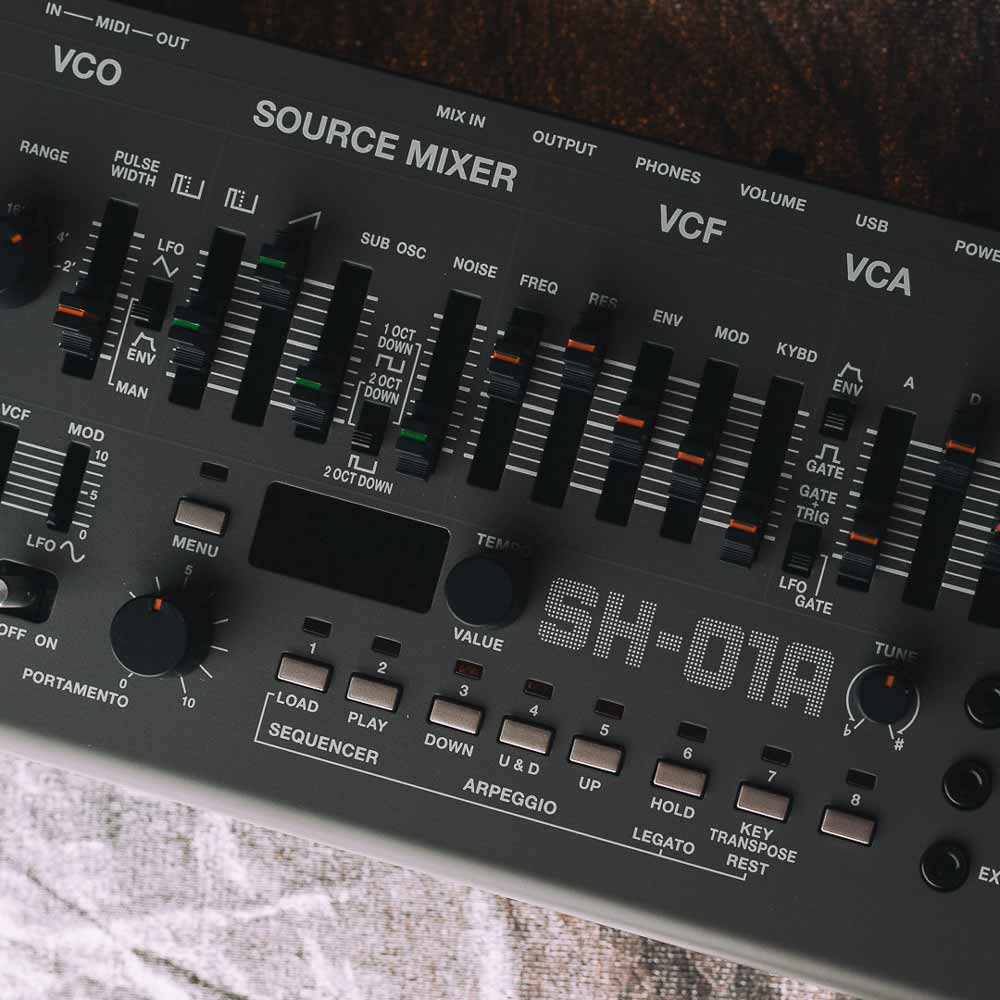
Roland SH-101 Vs. Roland SH-101A Comparison
In Conclusion
As you can see, filters help define a synth's sonic character, and they are probably the most fun component on a synth to tweak—but, it isn't the only defining component of a synth. We still have to talk about different oscillator designs, VCAs, and envelopes that also help to give every synth its character; yet, filters remain the most apparent component that contributes to a sound.
Hopefully, this guide will help you in curating the synth arsenal of your choice! Now, just head to the Synth Exchange, where you can go ahead and tweak some knobs. While you’re here, if you have any questions on any of the newer synths that I have mentioned in the examples above, please let me know, via email, online, or in-store, where I will be happy to assist!
- Roland Chira
Related Posts

Boutique Guitar Showcase | enTour 2026
Chicago Music Exchange is proud to once again host the Boutique Guitar Showcase enTour, returning for 2026 after six celebrated years. On Wednesday, September 9, join us in The Vault for an exclusive in-person showcase featuring over 50 one-of-a-kind instruments from today's most innovative boutique builders worldwide, curated by Jamie Gale. RSVP below to reserve your spot.
Read more
Benson Amps | CME Exclusive Blue Floral Amplifiers
Chris Benson has spent over a decade building hand-wired tube amps that give classic American circuits a harmonically rich twist — and now three of his amps are getting a look you can only find at CME. We're proud to introduce three CME Exclusive Benson Amplifiers in a one-of-a-kind Blue Floral finish: the Monarch Reverb Plus, Vinny Reverb, and Nathan Junior. All three are hand-built, point-to-point wired, and in stock now.
Read more
Introducing | Frank Brothers Guitar Company
Started by Nick, Jon, and Tim Frank in 2014, are building upon their family history of award winning music production for the next generation of performers! Together, they are building a lineup of models that stand out in a crowded field, inspired by the unique retro-cool styling of ‘60s and ‘70s Japanese imports to craft a family of guitars. Unlike those catalogue guitars of yesteryear though, each Frank Brothers guitar features a handmade quality, countless hours of craftsmanship, and carefully chosen specifications that define the playing experience of each instrument, such as an extra-deep neck tenon and their trademark blended heel.
Read more