


The Legend of the klon centaur
Half Man, Half Horse: The Wrath of Klon
Every so often, a pedal comes along that's so singular, so completely and wildly effective, that it manages to go where none like it have gone before. Then, just like that, it vanishes, lighting up message boards and driving up eBay auctions, becoming the stuff of myth.
So it was with the Klon Centaur.

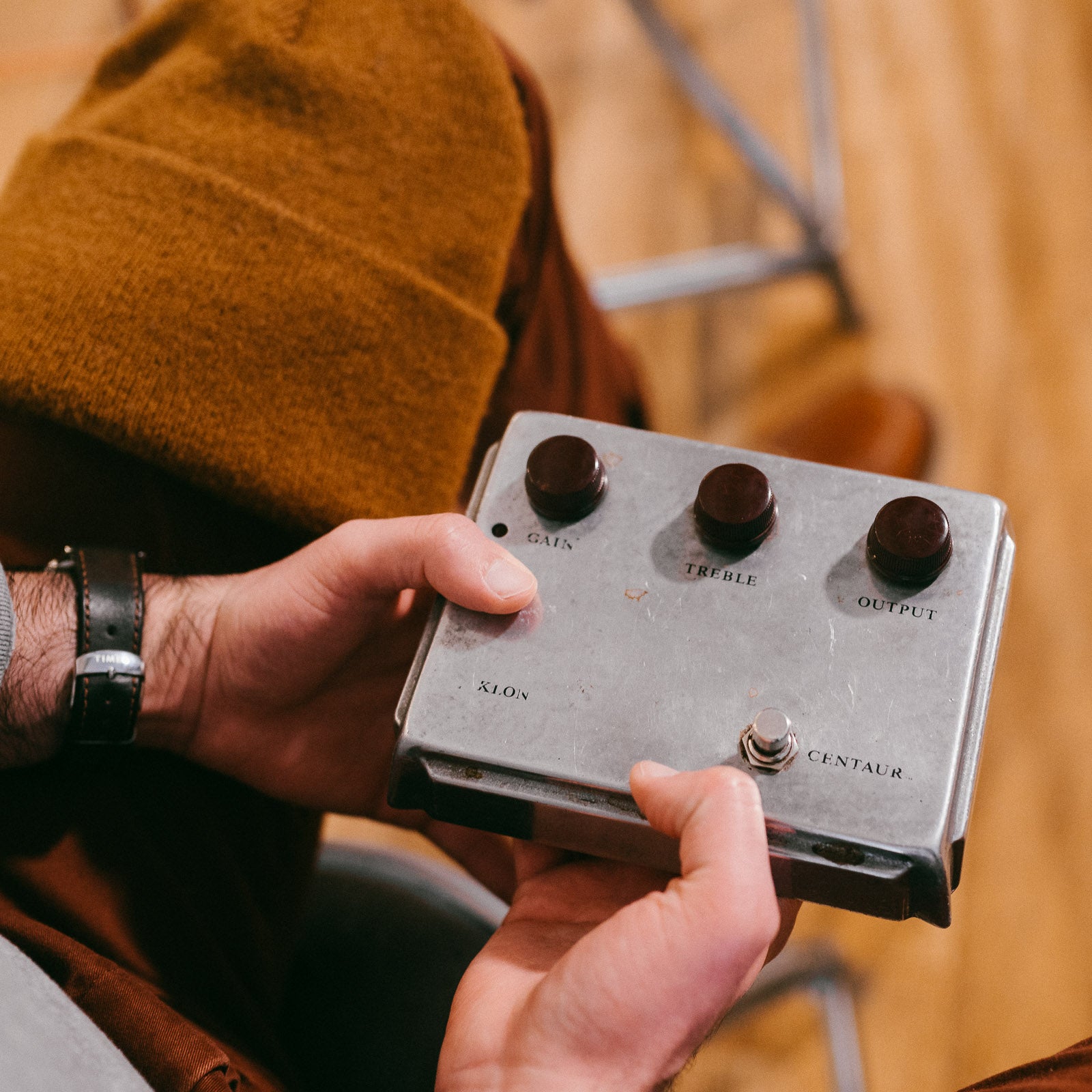
One of the most sought-after pedals of the last 30 years, the Klon Centaur is a transparent overdrive designed by Bill Finnegan. First introduced in 1994, this legendary pedal originally retailed for $225, a tidy sum in the early-to-mid '90s. Now, it regularly fetches upwards of $3K, with gold (or "Horsie") models commanding as much as $4K more.
But why?
Well, a lot of reasons. For one, it sounds good. Not every transparent overdrive is really "transparent," meaning it boosts the gain without changing the tone. For the Klon, this is no problem. An IC MAX1044 voltage converter allows it to run at higher voltages, generate a higher order of harmonics and extra internal headroom, great for a clean boost. But if you need some dirt, dial up the Klon's dual germanium diodes to clip your waveform. If you want, you can even mix some of the clean in with the "dual-ganged" gain pot.


Another reason the Klon Centaur is so valuable? Finnegan just didn't make that many, only about 8,000 between 1994 and when he discontinued the pedal in 2009. $225 was a crazy amount of money to pay for an overdrive at a time when "boutique pedals" weren't really a thing, not to mention the popularity of digital rack-mounted units was growing, and or older time-tested, overdrives were widely available for less.
Thankfully, we don't have to live in a Klon-less world. Finnegan reissued the pedal under the name "KTR" in 2014. And even though the circuitry on the original Klons was "gooped," or covered over with black epoxy resin to obscure the design, many effects manufacturers have since introduced some pretty reliable Klon clones to compete with rising vintage and second-hand prices.

CME-Style RYRA Klon
Handmade in founder Shane Logan's home workshop, each RYRA Klon Overdrive is a precise replica of the original Klon, constructed from the best materials available, including many difficult-to-source NOS components. Get one in traditional Gold or this CME Exclusive Chameleon!

Whether you want to saddle the mythical beast or you're looking to ride without ponying up, we can help.
Take the reins and call, click, or visit us today to talk about stabling the legendary overdrive for yourself.
Related Posts

Boutique Guitar Showcase | enTour 2026
Chicago Music Exchange is proud to once again host the Boutique Guitar Showcase enTour, returning for 2026 after six celebrated years. On Wednesday, September 9, join us in The Vault for an exclusive in-person showcase featuring over 50 one-of-a-kind instruments from today's most innovative boutique builders worldwide, curated by Jamie Gale. RSVP below to reserve your spot.
View Details
Benson Amps | CME Exclusive Blue Floral Amplifiers
Chris Benson has spent over a decade building hand-wired tube amps that give classic American circuits a harmonically rich twist — and now three of his amps are getting a look you can only find at CME. We're proud to introduce three CME Exclusive Benson Amplifiers in a one-of-a-kind Blue Floral finish: the Monarch Reverb Plus, Vinny Reverb, and Nathan Junior. All three are hand-built, point-to-point wired, and in stock now.
View Details
Introducing | Frank Brothers Guitar Company
Started by Nick, Jon, and Tim Frank in 2014, are building upon their family history of award winning music production for the next generation of performers! Together, they are building a lineup of models that stand out in a crowded field, inspired by the unique retro-cool styling of ‘60s and ‘70s Japanese imports to craft a family of guitars. Unlike those catalogue guitars of yesteryear though, each Frank Brothers guitar features a handmade quality, countless hours of craftsmanship, and carefully chosen specifications that define the playing experience of each instrument, such as an extra-deep neck tenon and their trademark blended heel.
View Details