


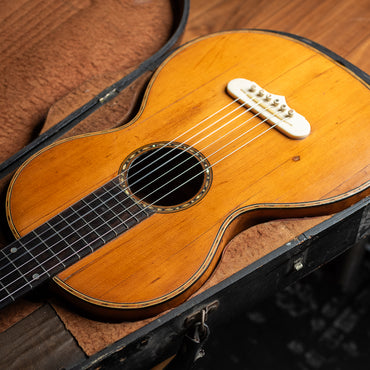
Vintage Vibes | 1838 Martin & Bruno Parlor Guitar
Fender Highways Series Event Featuring Julia Rizik
Join us at Chicago Music Exchange on Thursday, November 30, for a special Fender event introducing the new Highway Series guitars and featuring Fender artist Julia Rizik in CME’s Lincoln Avenue showroom!
In addition to a demonstration of the new series, guests will receive Fender-branded swag. Guests will also be invited to record themselves playing a Highway Series guitar to enter an exclusive raffle!
The Elusive History of the Ultra-Rare Vintage Martin & Bruno Parlor Guitars
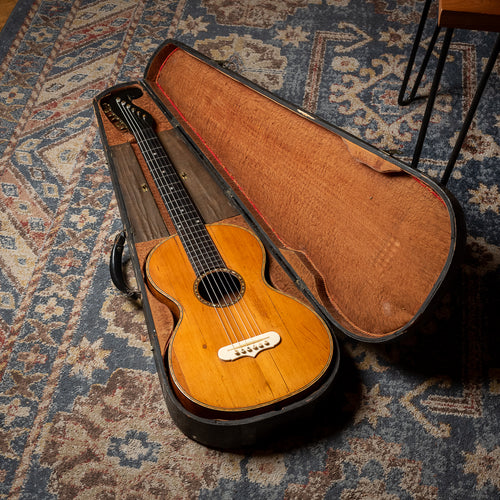
Behold! Among all the rare, collectible vintage guitars in CME’s ever-changing inventory of vintage and used instruments, we’re preparing to part with one of the most astoundingly playable—yet, historically confounding—acoustic guitars we’ve ever owned, built by the founder of America’s oldest guitar manufacturer, Christian Frederick Martin, himself!
What Makes This 185-Year-Old, C.F. Martin–Built Guitar So Special?
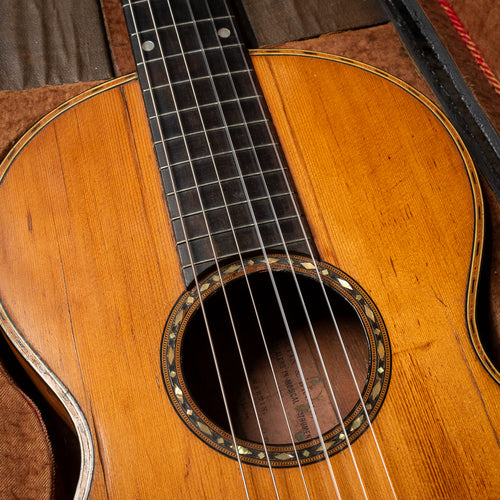
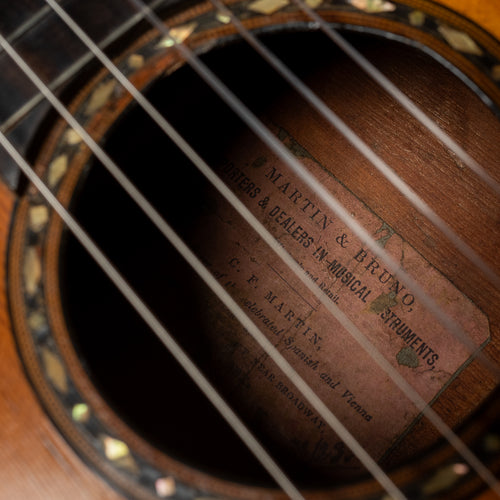
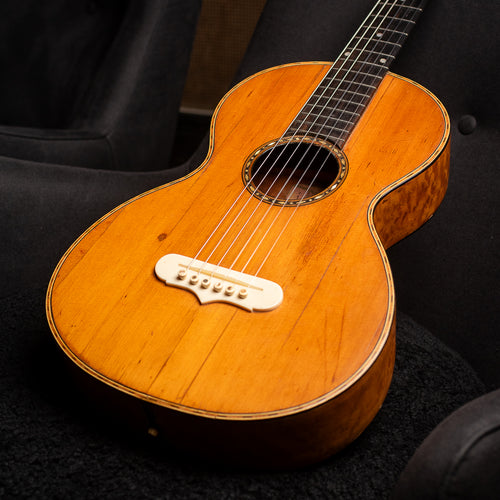
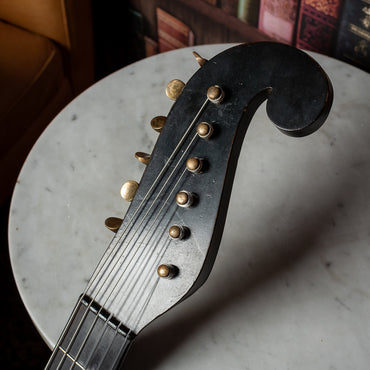
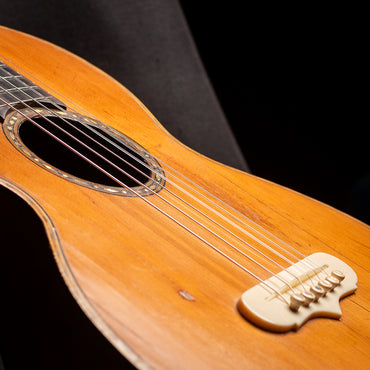
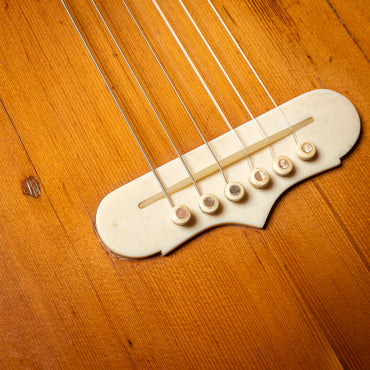
At first glance, the parlor-sized guitar body, ivory (or, perhaps, simply “bone”?) bridge, and Stauffer-style headstock all betray this guitar’s age. But, if you take a look inside the soundhole, you’ll see one maker’s mark you’d expect to find, followed by an ampersand and another name you almost surely wouldn’t—“Martin & Bruno”—making this one of only TWO Martin & Bruno acoustic guitars known to exist, today!
The Elusive History of Martin & Bruno Guitars
…An ampersand and another name you almost surely wouldn’t expect to find—unless you’re Greig Hutton, author of Hutton's Guide to Martin Guitars: 1833-1969 (Centerstream Publications, 2022), which builds on earlier archival work, filling in gaps using source documents, and features forewords by Dick Boak, George Gruhn, and Joe Spann.
While writing his history of America’s oldest acoustic guitar maker, Hutton contacted Chicago Music Exchange to inquire about the 1838 Martin & Bruno parlor acoustic, which had formerly been part of the Scott Chinery Collection, before being acquired by CME. Further investigation into the Martin & Bruno label’s content produced a clue that gave more insight into the big question: “Who is Bruno?”
Beneath the name “Martin & Bruno,” the label reads: “212 Fulton St., near Broadway, New York,” and then, “importers and dealers in musical instruments, wholesale and retail.” I.e., the address on the guitar manufacturer’s label refers to this particular instrument’s distributor in New York.
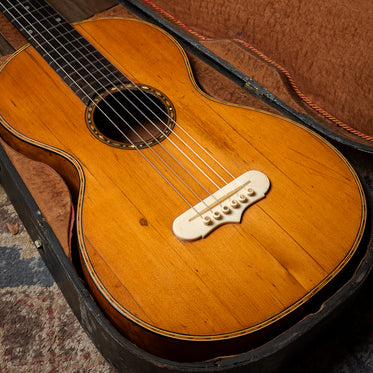
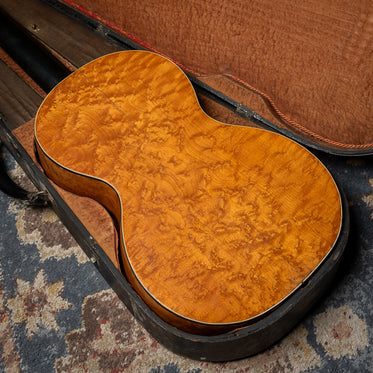
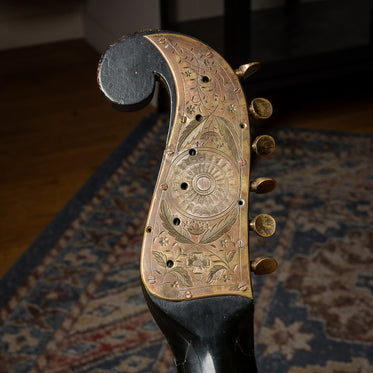
Considering that this guitar had been built in New York the year before C.F. Martin packed up his family and moved the Martin clan and guitar manufacturing business to Nazareth, Pennsylvania, in 1838 (where C.F. Martin & Co. has remained since) led Hutton to posit a final answer to the question, “Who is Bruno?” He was simply another among a handful of instrument distributors to have helped C.F. Martin maintain his brand name’s cachet, which the founder spent five years building up while living and working in the biggest city in the U.S.
C.F. Martin’s solution? In a testament to the then-burgeoning manufacturer’s business acumen, he partnered with New York musical instrument distributors, like Charles Bruno—as well as John Coupa, the distributor of Martin & Coupa guitars of the same era—to retain his hold in the New York market.
Yet, since Charles Bruno was the one manufacturer with whom Martin’s founder had the shortest distribution agreement, relatively few Martin & Bruno guitars were built. Thus, only two Martin & Bruno guitars are known to have survived since 1838. And, CME is humbly honored to have owned one of them!
Watch Daniel Escauriza and Nathaniel Murphy discuss the backstory behind this extraordinarily playable, uber-rare vintage collectible, and hear how this historical instrument from the Chinery Collection sounds in Nathaniel’s hands!
Plus, check the huge variety of vintage and used instruments, ranging from rare collectible investments to player-grade road ready pieces on our website, in-store, or in the CME mobile app!
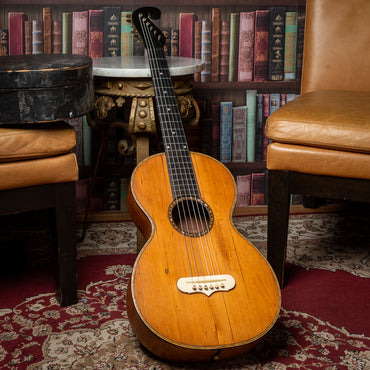
SHOP MARTIN GUITAR
Related Posts

Vintage Tours: Orlando Guitar Show
Our vintage buyers travel to the Orlando International Guitar and Music Expo, where dreams come true. Deep in the heart of dreamland, gilded by the rays of the Sunshine State, there’s a place where fantasy becomes reality; where the imagination is manifest, and the pictures, songs, and movies you love spring to life in front of you as if under a benevolent spell. That place, of course, is the Central Florida Fairgrounds, home to Hamcation, Nude Nite Orlando, and the Orlando International Guitar and Music Expo.
Read more
Inside: Banker Custom Guitars
If you can believe it, Banker Custom Guitars is exactly what it sounds like–custom guitars, made by hand by a former banker–but they're also the first Gibson-authorized boutique builder.
Read more