


A BRIEF HISTORY OF KALAMAZOO GUITARS
You may have heard of Epiphone as Gibson’s budget brand of guitars, but before Gibson bought out this competitor, the brand produced budget brand guitars under the moniker of “Kalamazoo.” From 1933 to 1942, Gibson produced archtop and flattop acoustic guitars, lap steels, banjos, and mandolins under the Kalamazoo name.
During the guitar boom of the late 60’s when Rock ‘n’ Roll was king and everybody wanted to get their hands on an electric guitar, Gibson produced electric solid body guitars and basses with Kalamazoo on the headstock. After Gibson’s buyout of Epiphone, Epi’s were marketed as a middle-tier electric guitar, whereas Kalamazoo was strictly marketed as a low-cost, beginner guitar. “U.S.A.” was added to the headstock of these guitars to differentiate them from the cheap import guitars that served as competition at the time.


Kalamazoo guitars in the 60’s featured bolt-on necks, single sheet plastic pick guards, open-back tuners and Masonite bodies in order to keep the cost down. There were two main body styles of Kalamazoo guitars in the 60’s. Manufactured from 1965 to 1966, the guitars closely resembled the styling of the popular Fender Mustang.
From 1967 to 1969, the bodies of the KG-1 and 2 closely resembled the body style of the popular Gibson SG or Melody Maker with its double cutaway horns, but removed the contours from the cutaways. The KG-1 featured one single-coil pickup, a volume knob and a tone knob. The KG-1A was hardly a more premium option, but featured a Maestro vibrola behind its wraparound tailpiece. The KG-2 “doubled” the tonal options offered by the KG-1 by offering two single-coil pickups, with double volume and tone knobs. The KG-2A followed the vein of its predecessor by offering a Maestro vibrola as well.

A Kalamazoo KG-1 in Sonic Blue
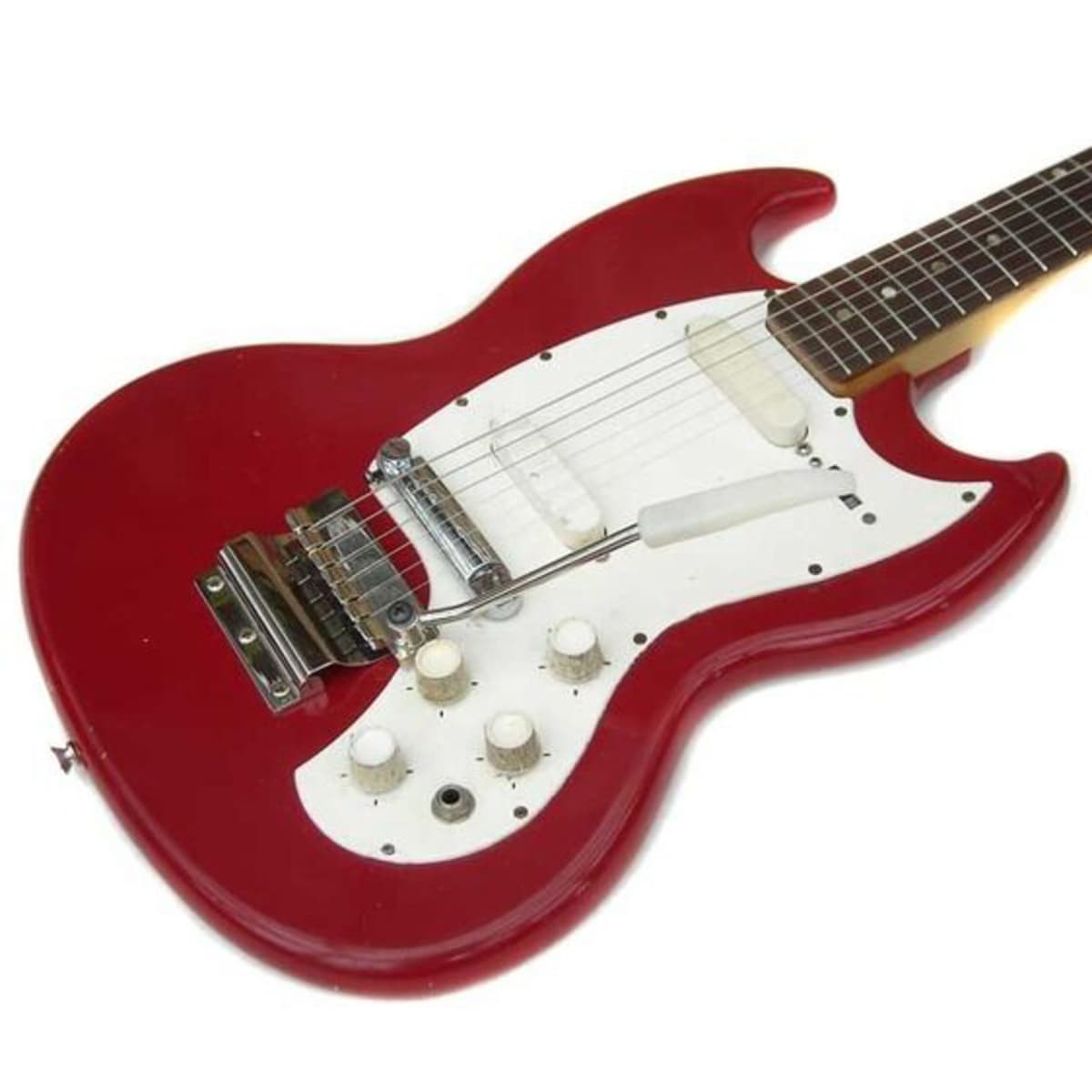
A Kalamazoo KG-2A in Dakota Red
Despite the fact that these guitars were made and marketed to be low-cost, beginner guitars, they are definitely still a viable option for collectors and fans today.
The use of Masonite for the body was an innovative and forward-thinking design decision, and while it is by no means a “tonewood” these guitars are still very lightweight, and have a unique tone and resonance to them. The necks are thin but very easy to play, and the overall build quality of these instruments are still very much up to Gibson quality standards.
SHOP VINTAGE ELECTRIC GUITARS
Related Posts

Yamaha Guitars | RS20MM Matteo Mancuso Signature Revstar
The Yamaha RS20MM Matteo Mancuso Signature Revstar recreates the custom instrument behind Matteo Mancuso's genre-blending, quasi-flamenco playing style — now available at Chicago Music Exchange. Built with a chambered Acoustic...
Read more
Bartel Amplifiers | CME Exclusive Limited 2-Tone Black & Gold
Chicago Music Exchange introduces new CME Exclusive Bartel Amplifiers in a striking Black & Gold 2-Tone finish, available only here. Designed by Mark Bartel, founder of Tone King, each amp...
Read more
Two Rock & Divided By 13 | CME Exclusive Guitar Amplifiers for The Vault
The Vault at Chicago Music Exchange is home to pre-CBS Fenders, late '50s Les Pauls, and boutique builds that don't come around twice — but until now, we never had...
Read more